
Secondment spotlight: Michal Januszewski at OneDay Health
February-March 2025 | Gulu, Uganda
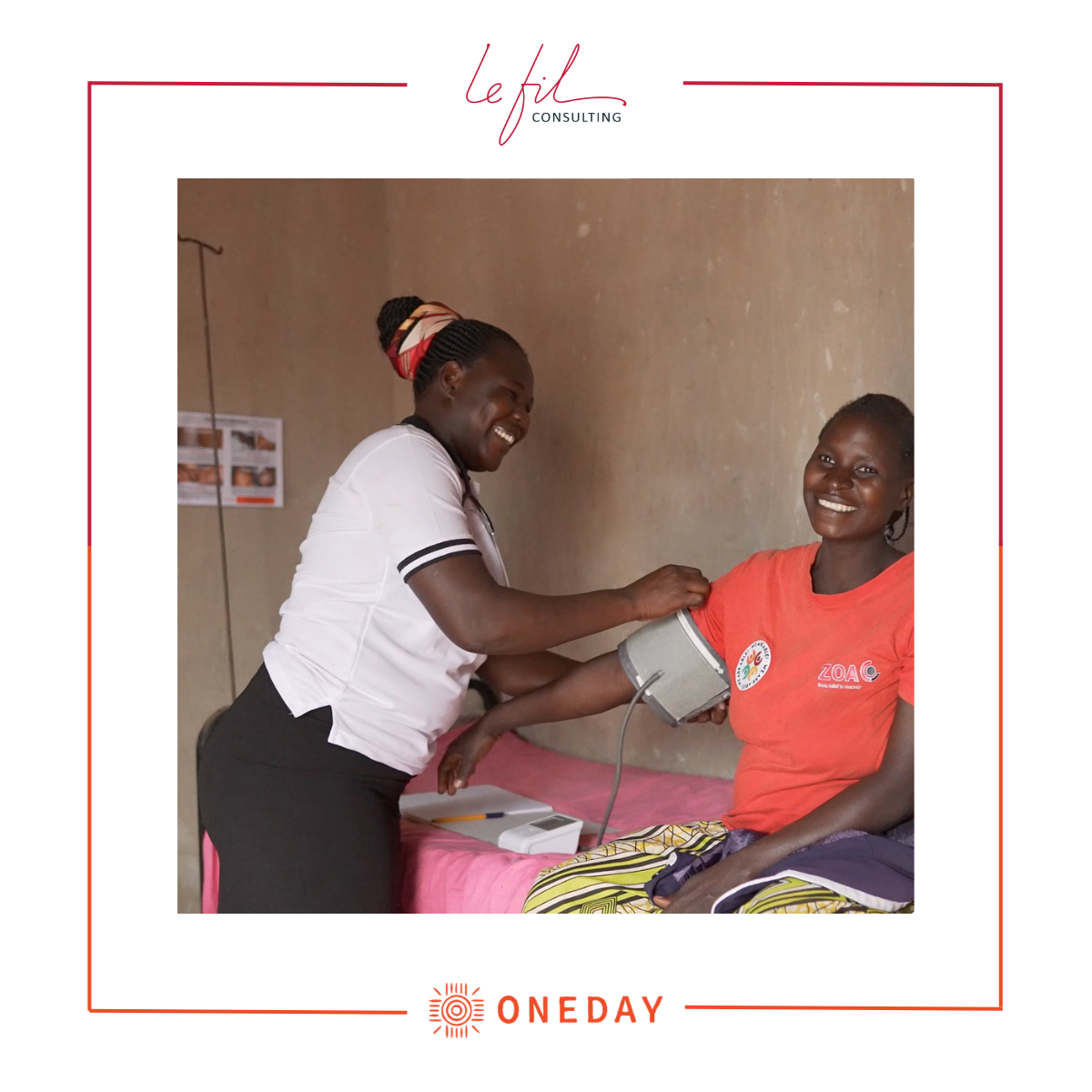 As part of LeFil Consulting’s commitment to supporting high-impact ventures across emerging markets, our team member, Michal Januszewski, was seconded to OneDay Health (ODH) for five weeks to help enhance the organisation’s capacity to measure its impact. ODH runs lean, nurse-led health centres that bring affordable, quality care to underserved rural populations in Northern Uganda, reaching communities often left behind by traditional health systems.
The challenge
Despite reaching significant scale, ODH needed a structured way to better evaluate, understand and communicate its social impact to patients, funders, and internal teams.
The approach
Working closely with the ODH team in Gulu and remotely, Michal led a structured impact measurement project, including:
- Theory of Change review: Together with the ODH leadership team, Michal refined the organisation’s Theory of Change, clarifying the outcomes ODH aims to achieve for both patients and nurses
- Assessment of data: He reviewed data ODH was already collecting to identify where additional data was needed
- Survey design: Based on these findings, Michal developed two targeted survey tools, one focused on patients and one on nurses. The patient survey explored healthcare access, cost savings, and care-seeking behaviour. The nurse survey assessed job satisfaction and development opportunities
- Enumerator training and data collection planning: Michal supported the training of local enumerators, equipping them to conduct both in-person interviews with patients and remote phone interviews with nurses
- Field implementation: Over two weeks, enumerators collected data from 527 patients across five clinics, and conducted interviews with 50 nurses who had been with ODH for more than three months. All data was captured using KoboToolbox
- Data analysis and dashboard creation: Michal conducted the full analysis in Excel and developed an automated interactive dashboard to visualise results and enable ongoing use by the ODH team.
The results
The dashboard is publicly available and can be accessed here: ODH Impact Dashboard
Some of the key results uncovered by the study included:
- 97% of patients would recommend ODH to others
- 76% report seeking care earlier/more often since visiting ODH clinics
- 83% report reduced reliance on drug shops (low-quality pharmacies used as a substitute for doctor consultation)
- $2.80 average saved per visit on transport costs
- 92% of nurses report being satisfied or very satisfied with their work
The implementation
ODH will leverage these results in several ways to improve both its operations and communication with stakeholders:
- Enhanced donor communication: These findings will be integral in strengthening ODH’s impact reports for current and prospective donors.
- Improved internal decision-making: The data allows ODH to target areas for improvement, particularly in the hubs where patient satisfaction and nurse experiences were slightly lower.
- Staffing and nurse support: ODH will address specific low-hanging fruit from the feedback from nurses to maintain and improve staff morale.

